

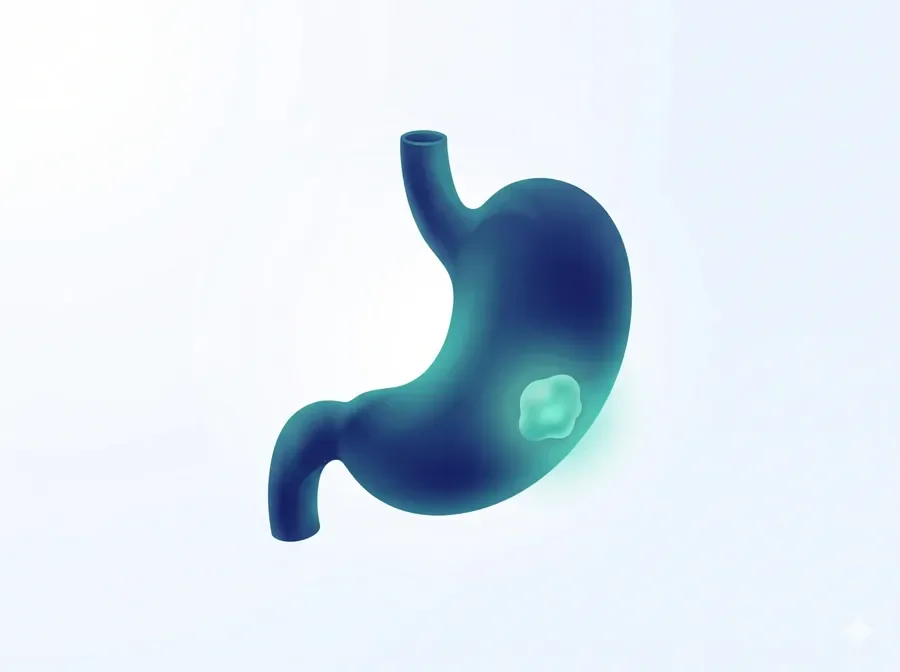
Stomach cancer arises in the lining of the stomach and often causes vague early symptoms such as indigestion and reduced appetite. Curative treatment is surgical removal (gastrectomy) with lymph-node clearance, frequently combined with chemotherapy.
Malignant tumour of the stomach lining
H. pylori infection, smoking, salty/preserved diet, family history
Persistent indigestion, weight loss, vomiting or anaemia
Gastrectomy with lymph-node clearance + chemotherapy
What is stomach cancer?
Stomach (gastric) cancer develops in the inner lining of the stomach and can spread through its wall and to nearby lymph nodes. A major risk factor is chronic infection with Helicobacter pylori, along with smoking and a diet high in salted or preserved foods. Early detection greatly improves the chance of cure.
Symptoms & diagnosis
Early symptoms are often non-specific — persistent indigestion, a feeling of fullness, mild upper-abdomen pain or reduced appetite. Warning features include unexplained weight loss, vomiting, difficulty swallowing and anaemia. A gastroscopy with biopsy confirms the diagnosis, and CT and endoscopic ultrasound stage the disease.
Treatment options
Curative treatment is surgical removal of part or all of the stomach (gastrectomy) together with the surrounding lymph nodes, often combined with chemotherapy before and after surgery. Laparoscopic techniques are suitable in selected cases, and very early tumours can sometimes be removed endoscopically.
Why specialist care matters
Gastric cancer surgery requires precise lymph-node clearance and reconstruction. Treatment planned within a multidisciplinary team by an experienced GI cancer surgeon offers the safest path to the best long-term outcome.
GERD (gastro-esophageal reflux disease) is the backflow of stomach acid into th…
Gastroscopy (Upper GI Endoscopy)Gastroscopy is a quick, sedated examination of the food pipe, stomach and duode…
EUS (Endoscopic Ultrasound)EUS combines endoscopy with high-resolution ultrasound to image the pancreas, b…
How we treat Stomach (Gastric) Cancer
 Recommended treatment
Robotic GI Cancer Surgery
Recommended treatment
Robotic GI Cancer Surgery
Robot-assisted curative surgery for stomach, oesophagus, pancreas and liver cancers — precise dissection around major vessels with less blood loss, fewer complications and faster recovery than open surgery.
View treatment details →Cashless insurance accepted at our network hospitals, with EMI options available. Every patient gets a written, transparent estimate before any procedure — no surprises.

Dr. Avinash Tank, MBBS · MS (General Surgery) · MCh (Surgical Gastroenterology, SGPGIMS)
SGPGIMS (India's premier GI centre) + advanced training in Japan & South Korea. Super-specialist gastrointestinal, bariatric & cancer surgeon treating Stomach (Gastric) Cancer at Dwarika Hospital — Gastro, Bariatric & Laparoscopic Surgery Center.
Proof, not promises
 DWARIKA HOSPITALPatient Education

More on Stomach (Gastric) Cancer
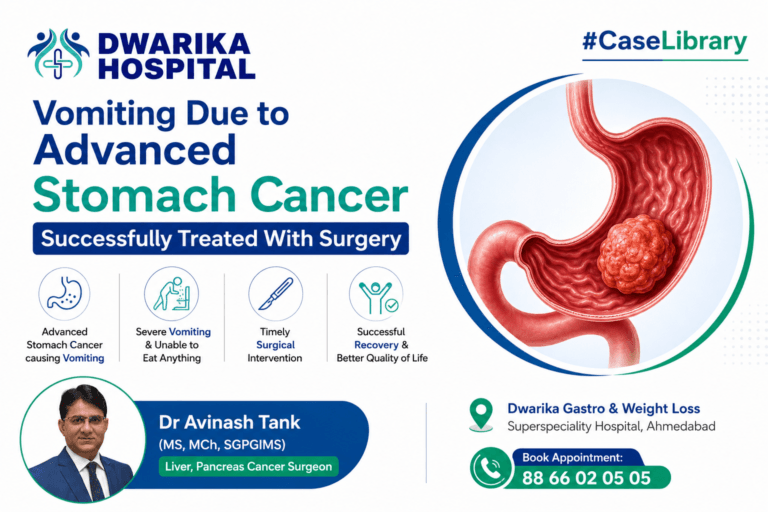 CancerVomiting due to Stomach Cancer Successfully Treated With Surgery
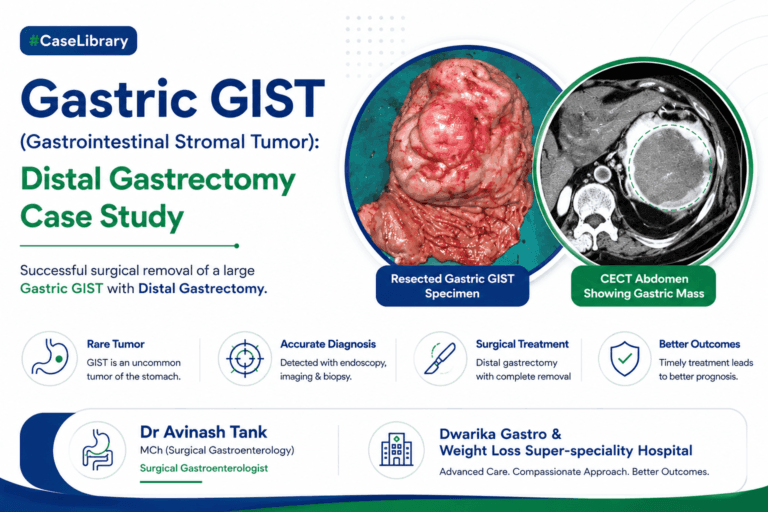 Case LibraryGastric GIST (Gastrointestinal Stromal Tumor): Distal Gastrectomy Case Study
 CancerBest Stomach Cancer Doctor in Palanpur
Frequently asked questions
Early signs are often vague — persistent indigestion, early fullness, mild upper-abdomen pain or loss of appetite — which is why ongoing symptoms should be assessed with a gastroscopy.
Chronic H. pylori infection is a major risk factor for stomach cancer; treating the infection reduces that risk.
Yes, when caught early. Surgery with lymph-node clearance, often combined with chemotherapy, offers a strong chance of cure in early-stage disease.
Laparoscopic gastrectomy is suitable in selected cases and offers smaller incisions and quicker recovery while maintaining oncological safety.
Super-specialist GI, bariatric & cancer surgeon. SGPGIMS (India's premier GI centre) + advanced training in Japan & South Korea. Read full profile →
Last reviewed: July 2026